Still Dealing With Heel Pain? What to Do When Rest, Stretching, and New Shoes Aren’t Enough
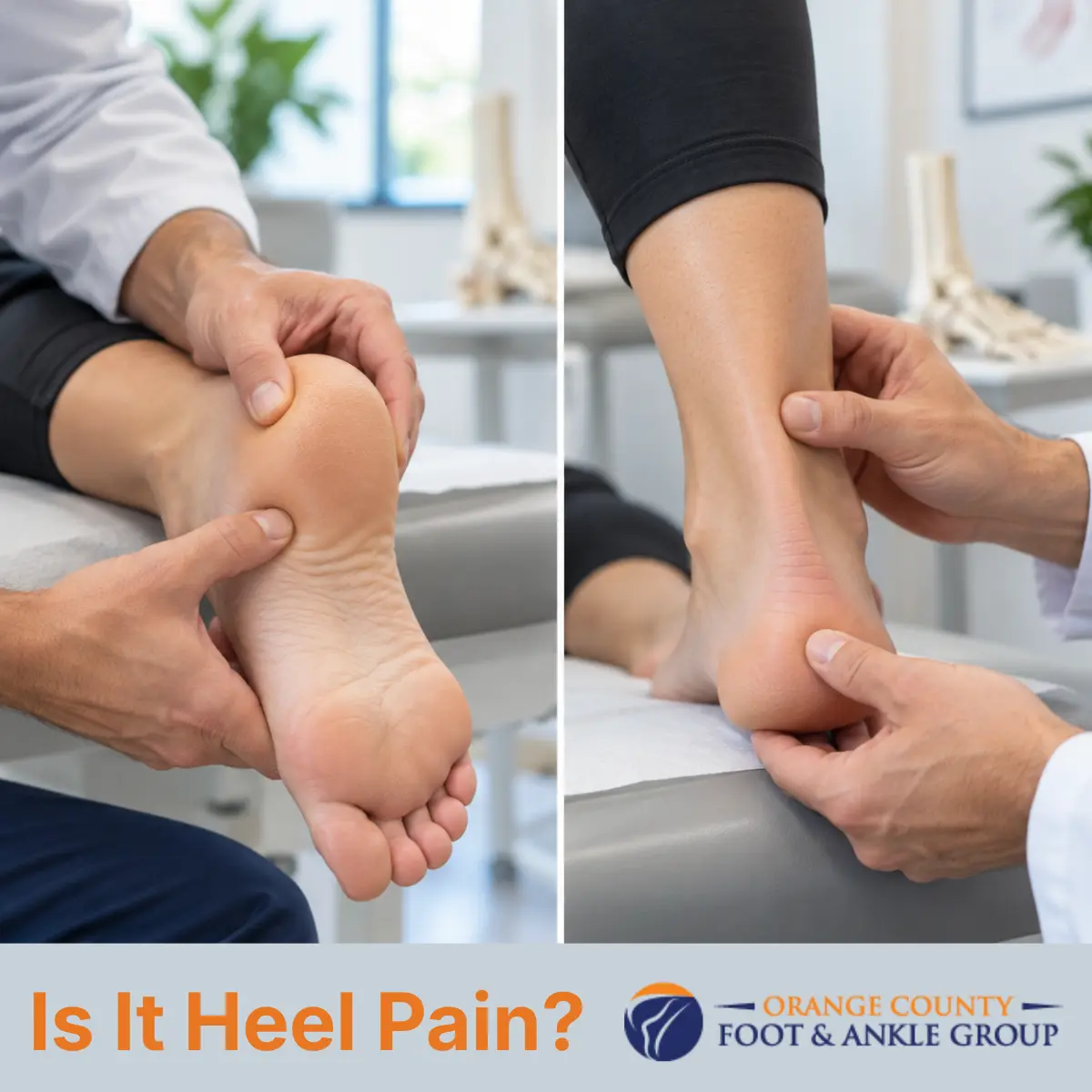
You bought the supportive shoes. You tried the stretches you found online. Maybe you even took a break from your morning walks. Yet the same heel pain keeps showing up, sometimes when you first stand and sometimes after a long day. If your discomfort is especially noticeable with your first steps after waking up, read our guide to morning heel pain to understand why that pattern occurs.
At some point, the question changes from “How do I make this stop hurting today?” to “Why does it keep happening?”
That is the question we want to help you answer at Orange County Foot & Ankle Group. Persistent heel pain does not mean you have run out of options. It often means it is time to look more closely at the source of the problem through a professional heel pain evaluation and build a plan around your feet, not somebody else’s.
Why the Usual Fixes May Not Be Enough
Heel pain can involve the plantar fascia, Achilles tendon, heel bone, surrounding nerves, or the tissues that cushion the foot. Some causes are closely connected to the way your foot handles pressure during standing and walking. Others relate to an injury or irritation in a specific structure. The common causes and treatment of heel pain are also explained by the American Podiatric Medical Association, including how foot mechanics and footwear can contribute to discomfort.
That variety helps explain why a new pair of shoes may be helpful for one person but make little difference for someone else. It is also why repeating the same home routine for weeks may not get you where you want to go.
A treatment plan should start with a diagnosis. During a heel pain evaluation, your podiatrist will ask where the pain occurs, when it started, what activities aggravate it, and what you have already tried. Examining your foot mechanics and flexibility may reveal contributing factors that are easy to miss on your own.
Custom Orthotics: More Than an Insert From the Store
If the way your foot moves or distributes weight is contributing to your symptoms, custom orthotics may be a useful part of your treatment plan. Unlike a generic insert chosen off a shelf, custom orthotics are prescribed with your individual foot structure, condition, and daily activities in mind.
Their purpose is not simply to add cushioning. Depending on the design, orthotics can provide targeted support, improve how pressure is distributed, and help certain patients function more comfortably during walking and standing. The nonsurgical treatment options for plantar fasciitis described by the American Academy of Orthopaedic Surgeons also include supportive footwear, stretching, physical therapy, and orthotics.
Think about what your feet handle in a normal week: hours at work, trips to the grocery store, exercise, errands, and the occasional long day exploring Orange County. A better-supported foot may make those everyday demands more manageable.
Custom orthotics are not necessary for everyone with heel pain, and they are usually considered alongside other strategies. The value is in choosing the right type of support for the right patient.
What Else May Be Part of the Plan?
An individualized heel pain plan may involve changes to footwear, guided stretching or strengthening, temporary adjustments to activity, and approaches tailored to the underlying cause. If a problem has persisted or involves specific soft-tissue concerns, your podiatrist may also discuss additional treatments.
OCFA offers platelet-rich plasma (PRP) and amniotic-based treatments as part of its regenerative medicine services. PRP is prepared from a patient’s own blood and concentrates platelets used in natural healing processes. Amniotic-based products are derived from donated birth tissue and represent a different category of biologic treatment. For selected diagnoses, these options may be discussed when considering a broader care plan.
The important distinction is that no one treatment is automatically the next step for every patient with persistent heel pain. Your diagnosis and goals determine which conversation makes sense.
Do You Need Surgery for Heel Pain?
In most cases, heel pain is managed without surgery. For patients with longstanding symptoms or particular structural problems, a surgical evaluation may eventually become part of the conversation. That does not mean walking into a podiatrist’s office commits you to a procedure.
A consultation is a chance to understand what is happening, ask questions, and consider the available approaches. The first goal is clarity.
What to Ask at Your Heel Pain Appointment
If you have been struggling with heel pain for a while, bring your questions with you. Ask what seems to be causing the pain, whether your foot mechanics are playing a role, and what the recommended plan is designed to improve. If custom orthotics are proposed, ask how they would fit with your shoes, lifestyle, and other treatment recommendations.
If regenerative medicine is discussed, ask which specific treatment is being considered and what its role would be for your diagnosed condition. A good conversation should leave you understanding your options, rather than feeling like you were handed the same answer as every other patient.
You Have Options. Start With a Better Answer.
You should not have to keep adjusting your plans because of a painful heel. Orange County Foot & Ankle Group provides personalized care in Fullerton, Tustin, Huntington Beach, and Santa Ana. Whether custom orthotics or another approach is right for you, the first step is learning why the problem keeps coming back.
Ready to find out what is causing your heel pain?
Schedule an evaluation with Orange County Foot & Ankle Group.
Frequently Asked Questions
Why is my plantar fasciitis not getting better?
Sometimes contributing foot mechanics, ongoing irritation, activity demands, or an inaccurate initial assumption about the cause can affect progress.
Are custom orthotics better than store-bought inserts?
It depends on your diagnosis and needs. Custom orthotics offer individualized design, but not every patient requires them.
Is PRP the same as an amniotic-based treatment?
No. PRP comes from your own blood; amniotic-based products are derived from donated human birth tissue.
What should I do if heel pain keeps returning?
Have the cause evaluated, especially if repeated self-care has not provided lasting improvement