Why Does My Heel Hurt in the Morning but Feel Better After Walking?
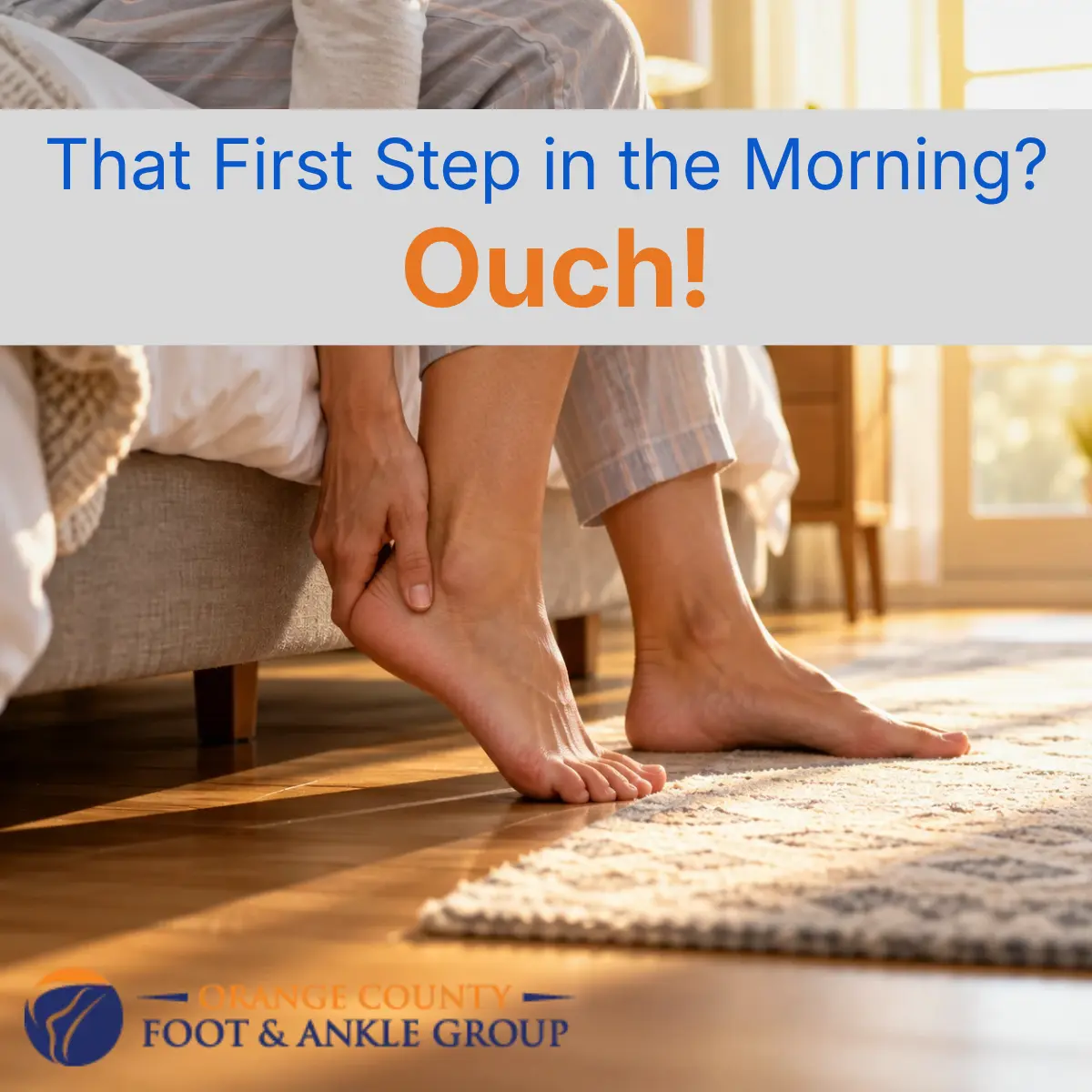
You swing your feet out of bed, stand up, and there it is: a sharp pain in your heel. You take a few careful steps toward the bathroom or coffee maker. By the time you reach the kitchen, the pain has eased. So you shrug it off and get on with your day.
Then tomorrow morning, the same thing happens.
If this sounds familiar, your feet may be telling you something worth paying attention to. Heel pain that feels especially noticeable with your first steps is a common reason people visit Orange County Foot & Ankle Group. Understanding the pattern can help you recognize when it is time to move beyond guesswork and explore appropriate heel pain care.
Why the First Steps Can Be the Worst
One common explanation for morning heel pain is plantar fasciitis, a condition involving irritation of the plantar fascia. This strong band of tissue stretches along the bottom of the foot and helps support the arch. When it becomes irritated, the first steps after a night of rest can pull on an already sensitive area. The American Podiatric Medical Association explains how plantar fascia irritation can cause heel pain, particularly after periods of rest.
As you walk and your foot starts moving, the discomfort may temporarily ease. That improvement can be misleading. Feeling better after ten or twenty steps does not necessarily mean the problem has resolved, particularly if the pain returns the following morning or after a busy day. You can also learn more about plantar fasciitis and its common symptoms.
A similar pattern can occur when you stand after sitting for a long time. That familiar moment when you get up from your desk or a restaurant table may be another clue.
Where Does It Hurt? The Location Matters
Pain from plantar fasciitis is commonly felt on the underside of the heel, often toward the inner edge. But heel pain is a symptom, not a diagnosis.
Pain at the back of the heel may point toward the Achilles tendon or the tissues around it. A deep ache after an increase in walking or exercise can raise a different set of questions. Burning, tingling, or pain that spreads may suggest nerve involvement. Even when two people describe “heel pain,” their treatment needs can be very different.
That is one reason we do not recommend choosing a treatment based on an online symptom checklist alone. The AAOS guide to plantar fasciitis symptoms also explains how first-step pain and other symptoms can help distinguish this condition from other causes of heel discomfort.
Why Heel Pain Can Come and Go
You may notice the most pain in the morning, some relief while moving, and soreness again after standing for hours. The repeated cycle can be frustrating, especially when your job, errands, and family responsibilities do not leave much room to rest.
Foot mechanics, the amount of time you spend standing, a recent change in activity, and the support your shoes provide can all play a role. Sometimes your symptoms began after an obvious change, such as a new exercise routine. Other times, nothing specific stands out.
For patients who are spending extra time shopping, traveling, or preparing for the holidays, a small problem can become much more noticeable by the end of the day.
What Can You Do Before Your Appointment?
Pay attention to when the pain starts, exactly where you feel it, and what seems to make it better or worse. You can also consider whether your current shoes provide enough support for the activities you do each day.
A few questions can help you recognize a pattern: Does your heel hurt after you have been sitting? Does the pain return after a long walk? Have you changed your shoes or activity level recently? Have you been stretching, resting, or using supportive footwear without meaningful improvement?
These details give your podiatrist a useful starting point. They also help distinguish a one-time sore foot from a recurring problem that deserves a closer look.
When Is It Time to See a Podiatrist?
If your heel pain keeps returning, interferes with normal walking, or has not improved with simple changes, an evaluation is a practical next step. You do not have to wait until the pain is unbearable to learn what is causing it.
At Orange County Foot & Ankle Group, we start by listening to your symptoms and examining the way your foot moves and bears weight. Once the cause is clearer, we can recommend a personalized plan. For some patients, that plan may include footwear guidance, stretching, and custom orthotics to improve support and manage pressure on the heel. Other patients may need a different approach based on the diagnosis.
What About Custom Orthotics?
If foot mechanics are contributing to recurring heel pain, custom orthotics may be part of the solution. They are designed around your individual foot needs and may help support the arch and redistribute pressure during everyday activity.
The important part is choosing them for the right reason. Orthotics work best as one part of a plan that addresses the actual source of discomfort, rather than a universal fix for every sore heel.
Your Next Step
Morning heel pain may be common, but that does not mean you need to arrange your routine around it. OCFA serves patients in Fullerton, Tustin, Huntington Beach, and Santa Ana. If your first steps have become something you dread, schedule a heel pain evaluation and find out what your feet are trying to tell you.
Request an appointment: Schedule an appointment with Orange County Foot & Ankle Group.
Questions Patients Often Ask
Why does heel pain improve once I walk around?
Movement can temporarily reduce stiffness or discomfort in irritated tissue. The pattern is common with plantar fasciitis but is not exclusive to it.
Is morning heel pain always plantar fasciitis?
No. Achilles tendon issues, nerve irritation, injury, and other causes can produce heel discomfort.
Should I keep walking if my heel hurts?
That depends on the cause and severity. If walking aggravates symptoms or the pain keeps returning, a professional evaluation can guide safer activity choices.
Can custom orthotics help with morning heel pain?
For selected patients, orthotics can help improve support and redistribute pressure, usually alongside other care.