What Is Platelet-Rich Plasma (PRP) Therapy?
Platelet-Rich Plasma, commonly called PRP, is a treatment that uses a concentrated portion of your own blood to deliver platelets and growth factors to a targeted area.
Platelets play an important role in the body's natural healing response. In addition to helping blood clot, they release growth factors involved in tissue repair.
PRP therapy is designed to concentrate these components and introduce them into an area affected by injury or ongoing discomfort.
Because PRP is prepared from your own blood, it offers a different approach from medications or donor-derived biological products.
PRP has been studied for conditions such as plantar fasciitis, tendon injuries, arthritis, and sports injuries. Results vary depending on the condition, and treatment is not guaranteed to accelerate healing or relieve pain.
What Foot & Ankle Conditions May Benefit From PRP?
Plantar Fasciitis and Persistent Heel Pain
Does your heel hurt when you first get out of bed? Are you struggling with pain after standing, walking, or exercising?
Plantar fasciitis is one of the most common causes of heel pain. While many patients improve with conservative treatments, others continue to experience symptoms.
PRP has been studied as a treatment option for chronic plantar fasciitis, particularly when initial approaches have not provided sufficient relief.
Our podiatrists can evaluate the cause of your heel pain and determine whether PRP or another treatment is appropriate.
Tendon Injuries
Your tendons help support movement and stability throughout the feet and ankles. When they become injured or irritated, even everyday activities can become uncomfortable.
PRP has been investigated for certain chronic tendon conditions, including injuries that have not responded adequately to conservative care.
The goal of treatment is to support the body's natural healing processes, although research findings vary by tendon and injury type.
Sports Injuries
Whether you're an athlete, a weekend runner, or someone who simply enjoys staying active, a foot or ankle injury can disrupt your routine.
PRP is being studied for select sports-related soft-tissue injuries, particularly conditions involving tendons and other supporting structures.
Our team can help identify the extent of your injury and recommend a treatment plan focused on your recovery and long-term mobility.
Arthritis and Joint Discomfort
Arthritis can make walking, standing, and other everyday movements painful or difficult.
PRP has also been studied for certain arthritic joints as a potential way to manage symptoms. However, evidence for its effectiveness in foot and ankle arthritis remains limited.
Our podiatrists will explain the available treatment options and help you understand which approaches may be appropriate for your condition.
How Does PRP Therapy Work?
PRP therapy uses a straightforward process to prepare a concentrated portion of your own blood for injection.
- Step 1: Collecting Your Blood
A small sample of blood is drawn from your arm, similar to a routine blood test. - Step 2: Concentrating the Platelets
The blood is placed into a specialized centrifuge, which separates its components and concentrates the platelets within the plasma. - Step 3: Targeted Treatment
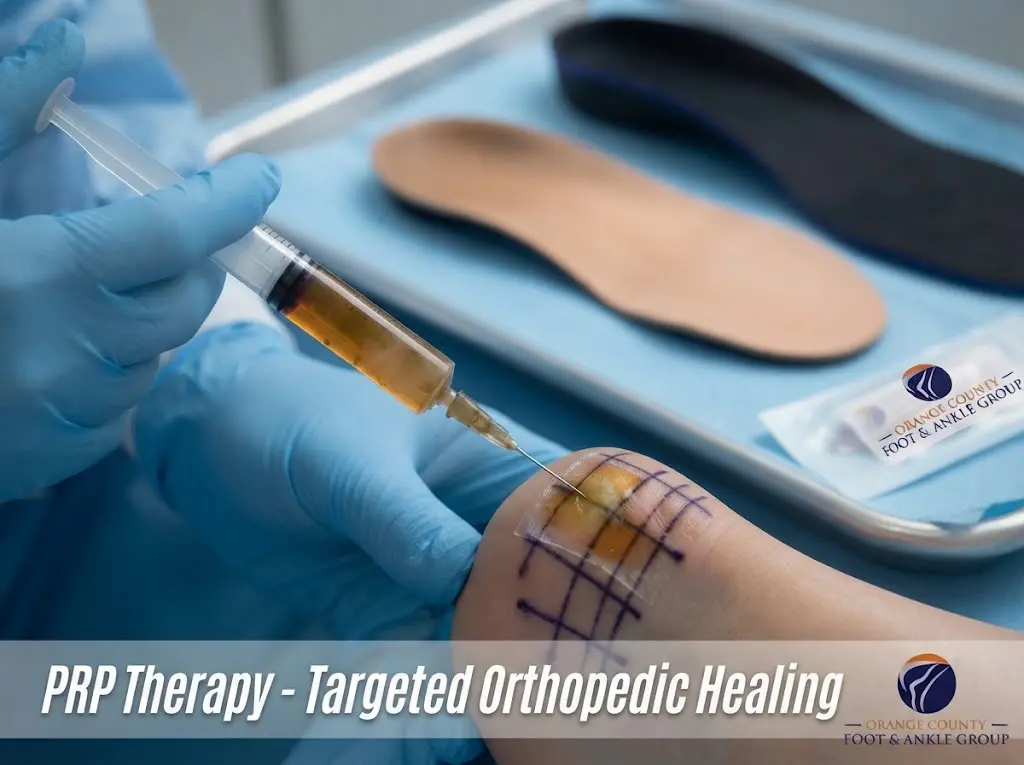
The concentrated PRP is injected into the area being treated. Your podiatrist will determine the appropriate injection approach based on your condition. - Step 4: Recovery and Follow-Up
Your physician will provide instructions regarding activity, recovery, and follow-up care. Some patients experience temporary soreness or swelling after an injection. Any improvement may take time, and the degree of benefit varies.
Why Are Patients Interested in PRP Therapy?
- Uses Your Own Blood: PRP is prepared from your own blood rather than relying on donor-derived biological material.
- Focused on Natural Healing Processes: Platelets contain growth factors involved in tissue repair, which is why researchers continue to study their potential applications in musculoskeletal care.
- Minimally Invasive Treatment: PRP is administered by injection rather than through an open surgical procedure, although injections still carry risks and require appropriate aftercare.
- An Additional Option to Explore: For certain conditions, PRP may be considered when conservative treatment has not provided adequate relief.
PRP is not appropriate for everyone, and it should not be viewed as a guaranteed replacement for established treatments or surgery.
Is PRP Therapy Right for You?
Not every foot or ankle problem requires PRP, and not every patient will benefit from it. The best treatment depends on your diagnosis, symptoms, medical history, previous care, and personal goals.
At Orange County Foot & Ankle Group, we take the time to understand what's causing your discomfort before making recommendations. We may discuss treatments such as orthotics, footwear changes, activity modifications, rehabilitation, medications, other injection therapies, or surgical care when appropriate.
Our goal is to help you make an informed decision and move forward with a plan that fits your needs.
Your Path Toward Better Foot & Ankle Health
- 1. Schedule Your Consultation
Tell us about your symptoms, previous treatments, and what you want to get back to doing. - 2. Get a Personalized Evaluation
We'll examine your foot or ankle, identify the likely source of your discomfort, and discuss appropriate treatment options. - 3. Take the Next Step With Confidence
Together, we'll create a care plan focused on your comfort, recovery, and long-term mobility.
Why Choose Orange County Foot & Ankle Group?
- Personalized Care That Starts With Listening: We want to understand how your condition is affecting your life, not just where it hurts.
- Advanced Treatment Options: Our practice is committed to evaluating modern treatment approaches while continuing to provide established podiatric care.
- Focused on Healing, Comfort, and Mobility: We know that your goal is to get back to walking, exercising, working, and enjoying life with less discomfort.
- Comprehensive Foot & Ankle Care: Whether you need conservative treatment, advanced therapy, or surgical evaluation, our team can help you explore your options.
Frequently Asked Questions About PRP Therapy
PRP has been studied for foot and ankle conditions including chronic plantar fasciitis, tendon injuries, certain sports injuries, and arthritis. Its effectiveness varies by condition, and evidence is still developing.
No. Standard PRP treatment uses concentrated platelets from your own blood. It is not a stem cell treatment.
Patients may experience discomfort during the blood draw or injection, as well as temporary soreness afterward. Your podiatrist will explain what to expect and discuss ways to manage discomfort.
Results vary depending on the condition and individual response. Some patients may experience gradual improvement over several weeks or months, while others may not experience meaningful relief.
PRP has been studied for chronic plantar fasciitis, and some clinical studies report improvements in pain and function. However, results are inconsistent, and PRP is not guaranteed to be effective for every patient.
Not necessarily. Some conditions may be managed without surgery, while others require surgical treatment. Your podiatrist can help determine which options are appropriate based on your diagnosis.
Coverage varies, and many insurance plans consider PRP for musculoskeletal conditions investigational or do not cover it. Our office can help you understand potential out-of-pocket costs before treatment.
PRP preparation devices may have FDA clearance for specific uses, but that does not mean PRP injections themselves are FDA-approved or proven effective for every foot and ankle condition. Your podiatrist can explain the regulatory status and evidence relevant to your proposed treatment.
Stop Letting Foot & Ankle Pain Set the Limits
Whether it's heel pain that won't go away, a tendon injury that's slowing you down, or discomfort that keeps you from enjoying your favorite activities, you deserve to understand your treatment options.
At Orange County Foot & Ankle Group, we're committed to helping you find the right path forward with advanced, personalized podiatric care.
Your next step toward better comfort and mobility starts with a conversation.
Schedule Your PRP Consultation Today